Zara Bennett · 25 October 2026
1970s Film Studio Transformations and the Emergence of Blended Photography-Live Action Museum Displays
During the 1970s major Hollywood studios underwent significant operational changes as television production expanded and theatrical film output adjusted to new economic realities, and these shifts created opportunities for archival materials and production techniques to move beyond traditional screen use into public exhibition spaces where actor photography combined with live-action reenactments formed the core of interactive displays. Research from institutions tracking entertainment industry history indicates that facilities once dedicated exclusively to feature film work began releasing still photography archives and set elements for educational and entertainment purposes, which in turn supported the development of venues that invited visitors to engage directly with recreated scenes.
Studio lot downsizing and asset redistribution during this decade meant that photographic negatives, costume collections, and prop inventories found new homes in museums and cultural centers, and those institutions experimented with formats that layered static images against performers who recreated key moments on modest stages. Data compiled by the Library of Congress film preservation division shows increased loans of studio photography to public programs between 1972 and 1979, a trend that coincided with rising attendance at hands-on history installations across the United States. Observers note that the availability of these resources allowed curators to move past passive viewing and toward setups where guests could stand beside enlarged actor portraits while actors performed synchronized movements drawn from the same productions.
Archival Resource Redistribution During Studio Reorganization
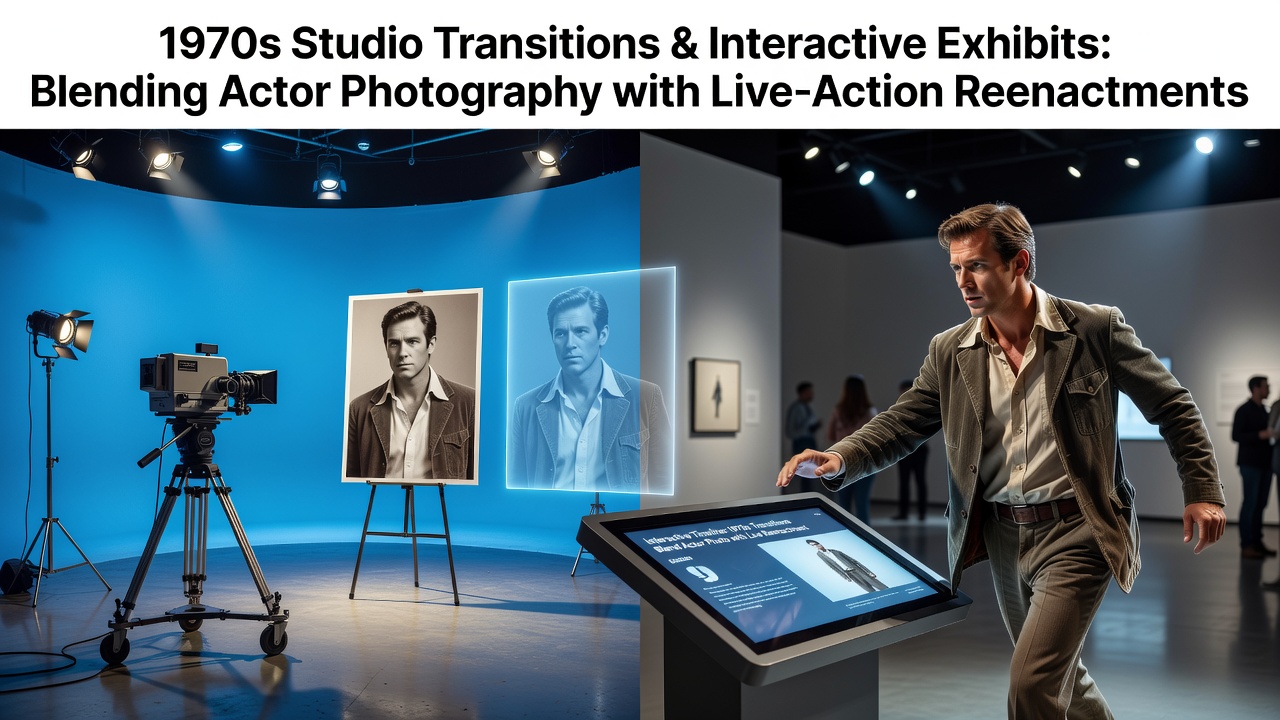
Financial pressures on major lots prompted sales and transfers of backlot structures and photographic libraries, and this redistribution supplied the raw materials for exhibit designers who sought to merge visual records with live interpretation. Studies conducted by university film departments document how former studio photographers transitioned into roles at emerging interactive centers, bringing technical knowledge of lighting and composition that informed the placement of large-scale prints within performance areas. The process created environments where visitors encountered a still image of a performer, then observed a live actor step into a matching costume and repeat the captured gesture, establishing a direct comparison between frozen and moving representations.
Equipment originally used for studio continuity photography found secondary applications in these exhibits, and technicians adapted those cameras to document visitor interactions for later analysis. Figures from industry reports reveal that several California-based production facilities donated complete sets of production stills to regional museums by the late 1970s, enabling the construction of multi-room installations that alternated between photographic galleries and reenactment zones. This practical transfer of assets laid groundwork for later developments that would incorporate digital overlays and motion-capture elements decades afterward.
Early Experiments in Audience Participation Formats
By the mid-1970s select institutions began testing small-scale demonstrations that placed visitors inside recreated scenes framed by enlarged actor photographs, and these trials demonstrated measurable increases in dwell time and repeat visits. Curators coordinated with former studio personnel to ensure accurate costume replication and gesture matching, while lighting setups borrowed from original production notes reproduced the photographic conditions. The resulting experiences allowed participants to compare their own positioning against the archival image and then watch a trained performer complete the sequence, producing a layered understanding of both static composition and performed action.
Additional programs emerged when regional theaters partnered with these museums to supply rotating casts of actors, and scheduling data from that period indicates consistent programming across multiple venues. One installation at a Midwestern cultural center incorporated audience members into short sequences documented by the same photographic methods used on studio sets, generating new stills that fed back into the exhibit cycle. Such feedback loops strengthened the connection between historical studio practices and contemporary visitor engagement.
Expansion into Larger-Scale Installations and International Interest
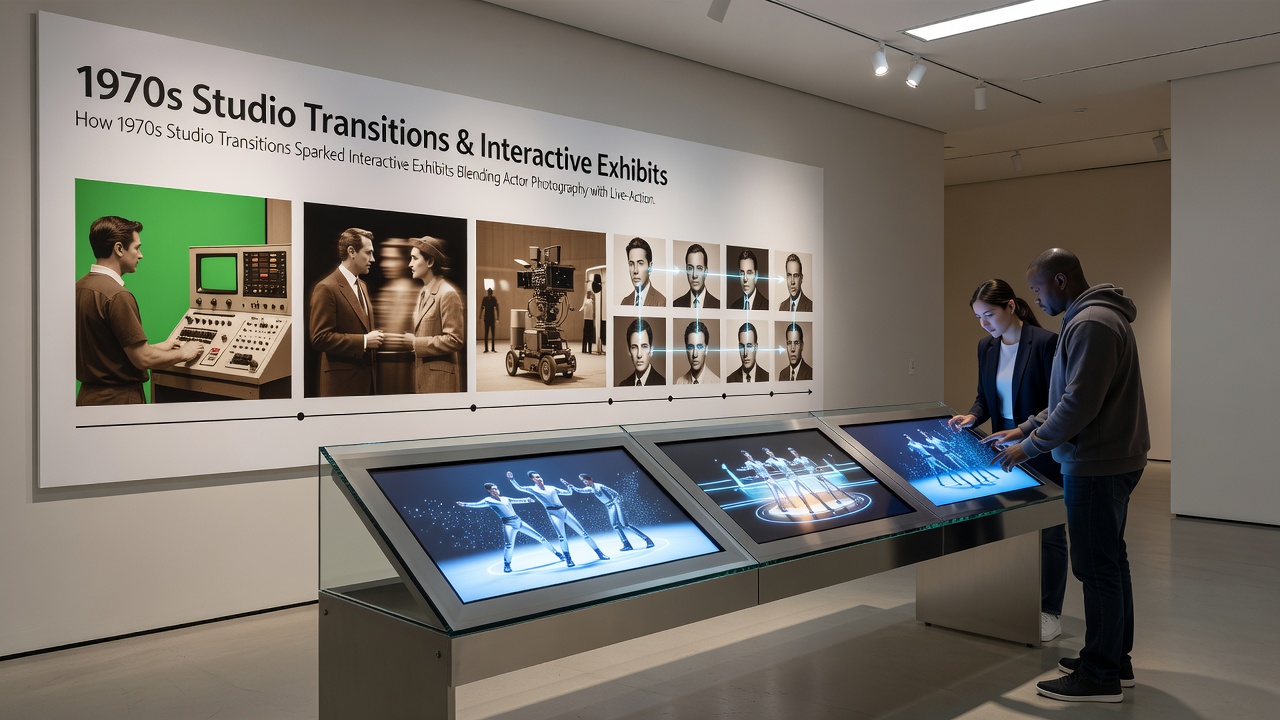
Success at early sites encouraged larger organizations to adopt similar models, and by the early 1980s several major metropolitan museums featured dedicated wings where actor photography formed the backdrop for scheduled live performances. Reports from the National Film and Sound Archive of Australia highlight parallel developments in that country during the same timeframe, where transferred production materials supported comparable hybrid displays that drew on both local and imported studio archives. These cross-regional exchanges expanded the available visual and performance resources while maintaining core principles established during the 1970s transitions.
Technological refinements introduced in later years built directly upon the spatial arrangements first tested in those initial exhibits, adn current projects scheduled for October 2026 at multiple venues will incorporate updated projection mapping over the original photographic and live-action framework. Planning documents describe continued emphasis on precise alignment between still images and performer movements, preserving the comparative structure that originated in the earlier studio-to-museum asset transfers.
Conclusion
The operational adjustments at film studios throughout the 1970s supplied both physical materials and technical expertise that enabled museums to construct interactive environments combining actor photography with live-action reenactments, and subsequent decades have seen these formats evolve while retaining their foundational logic. Records maintained by preservation organizations confirm the timeline and scope of resource transfers that made such exhibits possible, and ongoing installations continue to draw upon the same principles of visual comparison and performed replication. Future programming, including events planned for October 2026, will extend these methods into new technological contexts without altering the essential relationship between archival imagery and live interpretation established during the original period of studio change.